 English


Breast Augmentation in Turkey
Silicone implants chosen for your body and your goals, in a JCI-accredited hospital in Adana.
Male breast reduction for a flatter, firmer chest, in a JCI-accredited hospital in Adana.
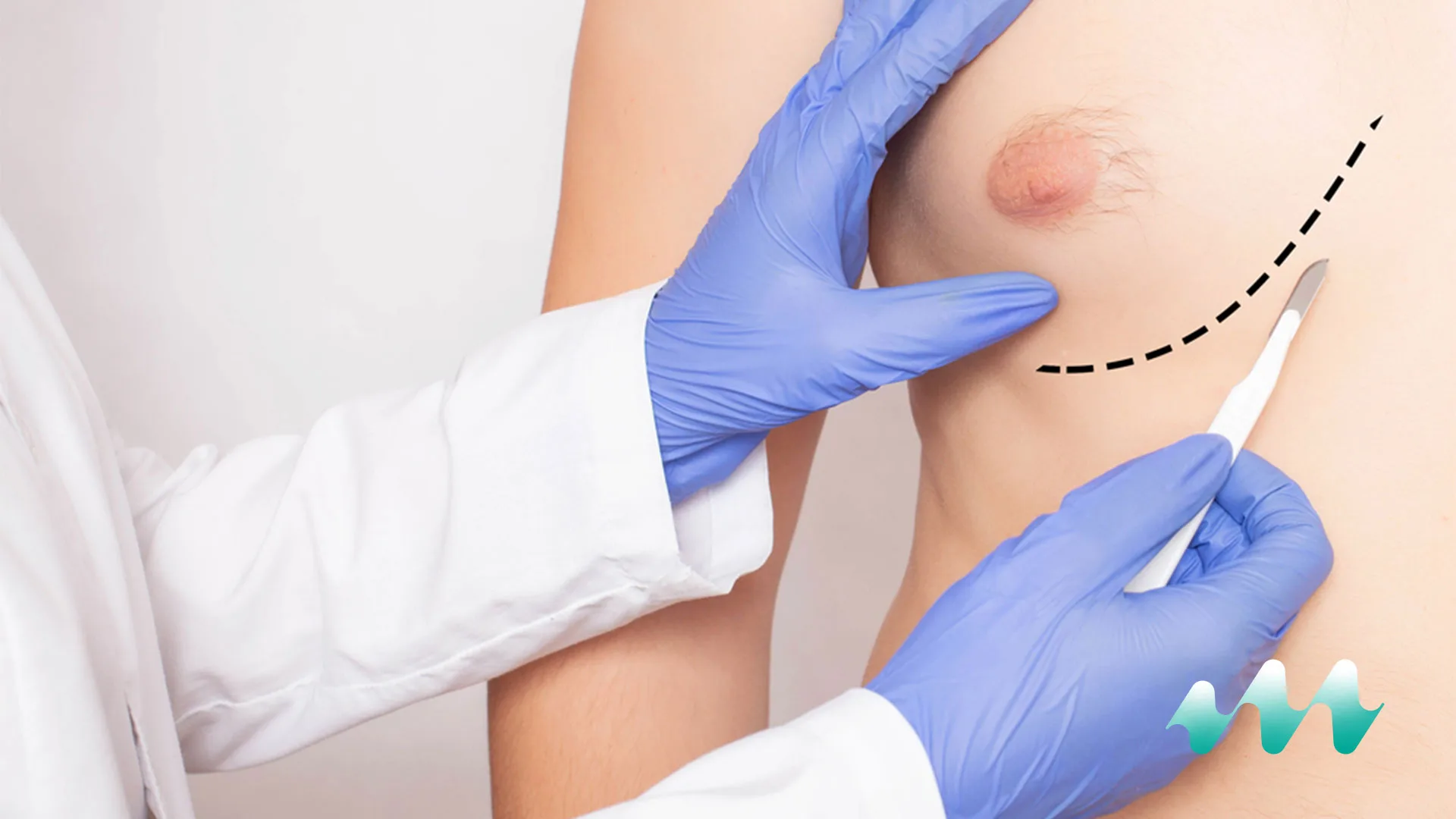
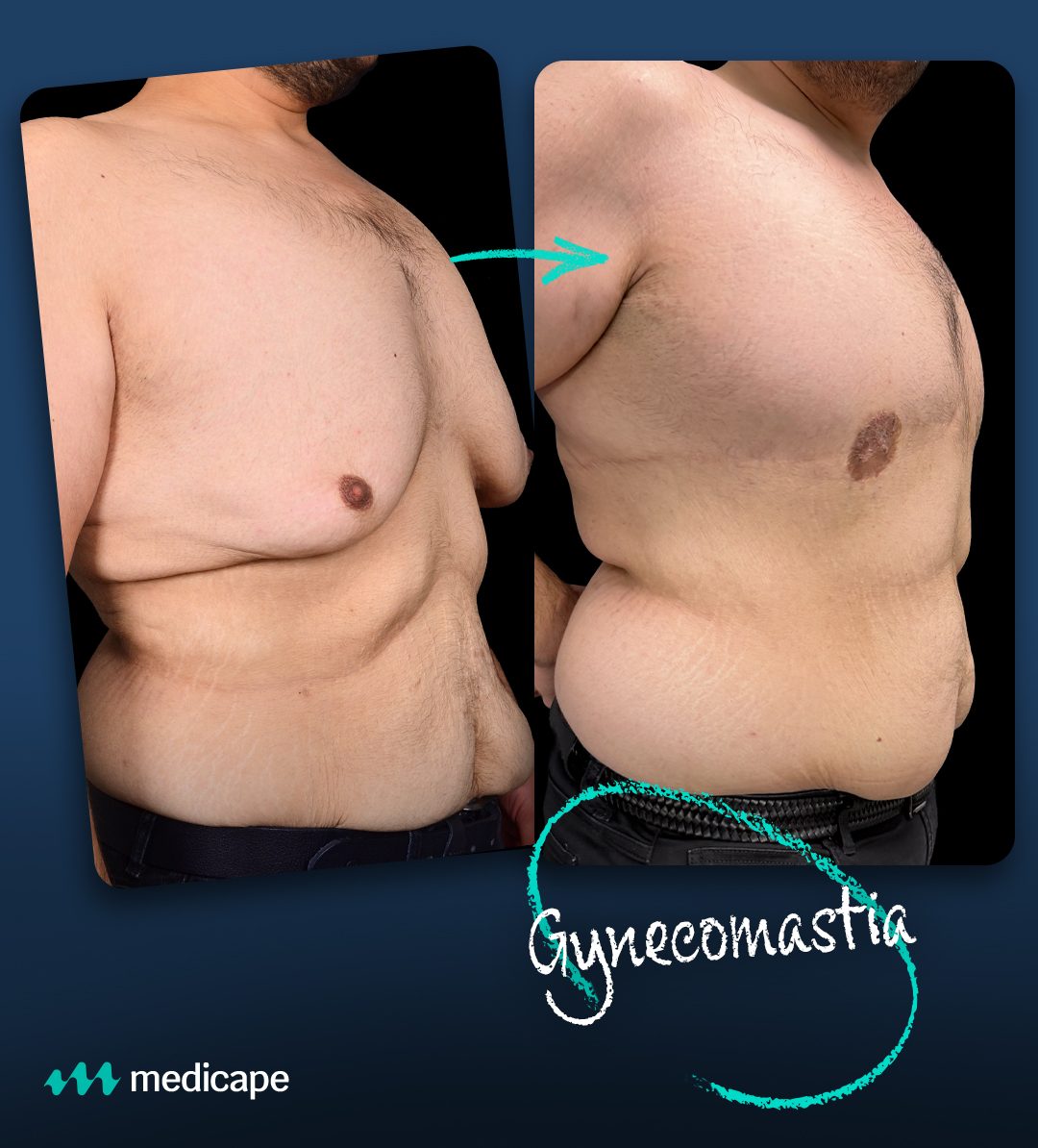
Gynecomastia is enlarged breast tissue in men. It’s very common and usually harmless. It can be caused by hormone changes, genetics, weight gain, certain medicines or anabolic steroids, and sometimes there’s no clear cause.
Many men find it affects how they dress, train and feel without a top on. When the fullness doesn’t improve with diet and exercise, surgery can give a flatter chest.
This is the most important question, because it decides how you’re treated.
Weight loss and training can reduce fat, but they don’t remove glandular tissue. After major weight loss, there may also be loose skin, which needs to be removed with a longer scar.
| Type | What it feels like | How it’s treated |
|---|---|---|
| Fatty (pseudogynecomastia) | Soft fullness across the chest | Liposuction |
| Glandular | A firm, rubbery disc behind the nipple, often with puffy nipples | Removal of the gland through a small cut at the edge of the areola |
| Mixed, the most common | Both | Liposuction and gland removal together |
Your surgeon will assess your photos and tell you which type you have. If needed, an ultrasound is done before surgery.
Gynecomastia surgery may suit you if:
Please see a doctor first if the swelling is on one side only, is painful, has grown quickly, or you notice a hard lump or discharge from the nipple. These need to be checked before any cosmetic surgery.
Younger patients: gynecomastia in teenagers often goes away on its own. We usually treat patients aged 18 and over. Younger patients are considered only after a full assessment and with a parent’s consent.
Your surgery is performed by a specialist in Plastic, Reconstructive and Aesthetic Surgery. You can find your surgeon’s profile, qualifications and experience on the Our Doctors page.
You’ll speak with your surgeon in your online consultation, before anything is booked.
If you’re combining gynecomastia surgery with a tummy tuck or another larger operation, you’ll need to stay longer.
On the flight home, wear your compression vest, drink water and walk around the cabin regularly.
Not included: flights, travel insurance, personal expenses.
Your surgeon will go through your personal risks with you before you decide.
Glandular tissue that is removed doesn’t grow back. But gynecomastia can return, or new fullness can appear, with major weight gain, anabolic steroid use, some medicines or an untreated hormone problem. Keeping a stable weight and avoiding steroids help you keep your result.
Will diet and exercise get rid of it?
They can reduce fat, but not glandular tissue. If you have a firm disc behind the nipple, exercise won’t remove it.
When can I go back to the gym?
Light cardio after two to three weeks, and chest and upper-body training from around six weeks, once your surgeon is happy with your healing.
Will people know I’ve had surgery?
The scars are small and usually hard to see once healed. Many men don’t tell anyone.
How long do I need to stay in Turkey?
About 5 days for gynecomastia surgery alone.
I’ve used steroids. Can I still have surgery?
Yes, but you’ll need to stop before surgery, and your surgeon may ask about the substances you’ve used. Using steroids again can bring gynecomastia back.
Is gynecomastia dangerous?
Usually not. But one-sided swelling, a hard lump or nipple discharge should always be checked by a doctor.
Can someone come with me?
Yes. Your companion can stay with you at the hotel.
 |
 |
 |
| Prof. Dr. Cengiz Eser Aesthetic, Plastic and Reconstructive Surgery Specialist |
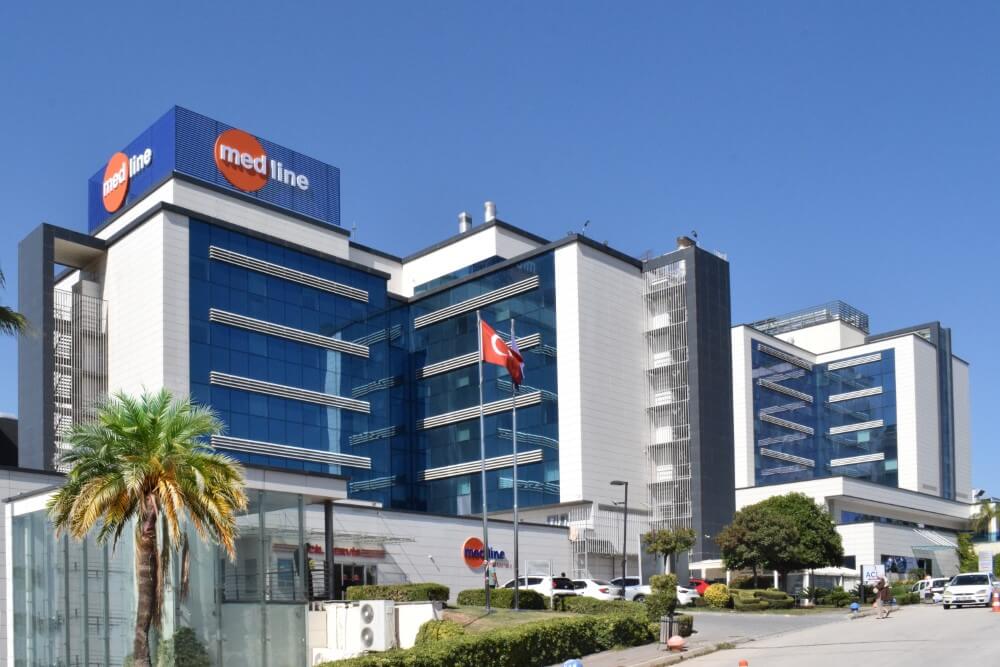
JCI-Accredited Hospital Contracted Hospital |
Gynecomastia Surgery (Male Breast Reduction) |
| Gynecomastia surgery is performed by a specialist in Aesthetic, Plastic and Reconstructive Surgery who focuses on breast and chest contouring in men. The aim is a flatter, firmer chest, with your safety first and an honest explanation of the scars before you decide. | Gynecomastia procedures at Medicape Health are performed at our JCI-accredited partner hospital in Adana. | Gynecomastia surgery removes excess fat and glandular tissue from the male chest, using liposuction, gland removal or both. |
The cost depends on the type of gynecomastia, whether skin needs to be removed and whether it’s combined with another procedure. Send us your photos and you’ll receive a written, all-inclusive quote within 24 hours.
Tell us briefly about your case and our patient coordinator will get back to you with the details.
Send us photos of your chest on WhatsApp. A patient coordinator replies within 24 hours, and your surgeon will tell you whether you have fat, gland or both, and what to expect, before anything is booked.
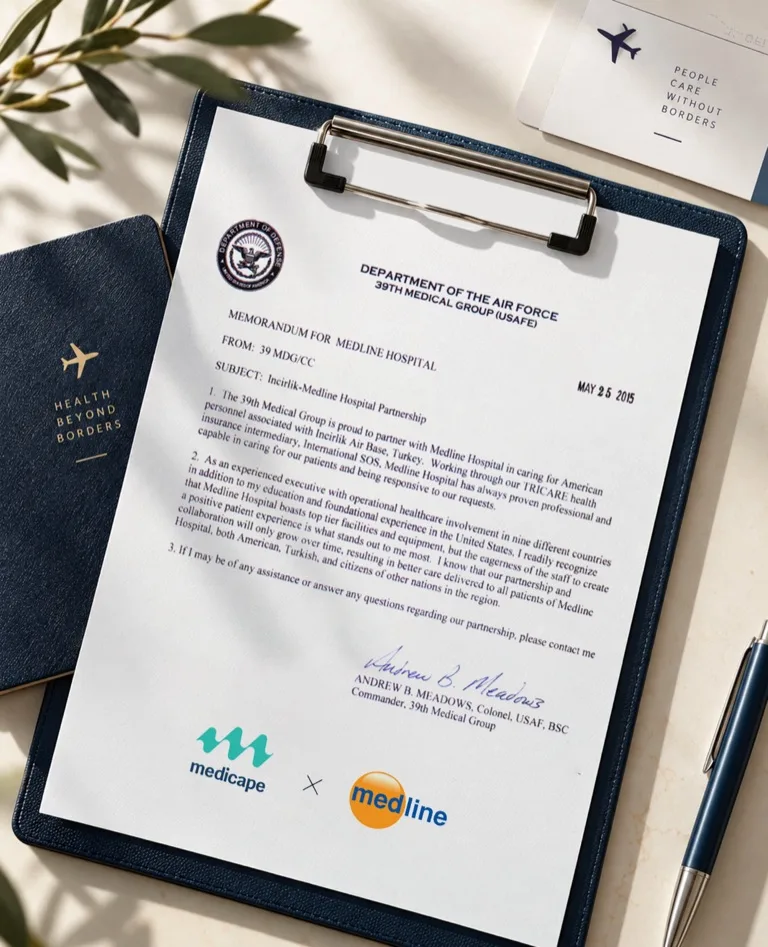
A Partnership Backed by International Trust
Medicape Health works in partnership with Medline Adana Hospital, a long-standing healthcare provider for the international community, including U.S. personnel associated with İncirlik Air Base.
A Relationship Recognized Since 2015
Medline Hospital’s quality of care and patient experience were recognized by the Commander of the U.S. Air Force 39th Medical Group in 2015.
About our partner hospital
Breast Augmentation in Turkey
Breast Reduction in Turkey

Breast Lift (Mastopexy) in Turkey