"Will my face look slimmer, or will I just look older in ten years?" Most people who ask us about buccal fat removal have seen dramatic photos online and want to know whether the same change would suit them. That is the right question, and a photo of someone else cannot answer it. The answer depends on why your lower cheeks look full, how old you are and how much volume your face has to spare.
Below we explain what the buccal fat pad is, which faces tend to suit the procedure, who is usually better off waiting or choosing something else, and what the procedure and the first weeks of recovery involve. The aim is to help you judge whether a consultation is worth having.
The buccal fat pad, sometimes called the Bichat fat pad, is a small pocket of fat that sits deep in the lower cheek, between the cheekbone and the jaw. Everyone has one on each side. In some people the pads are naturally large, and the face looks round or "baby-faced" even at a healthy, stable weight.
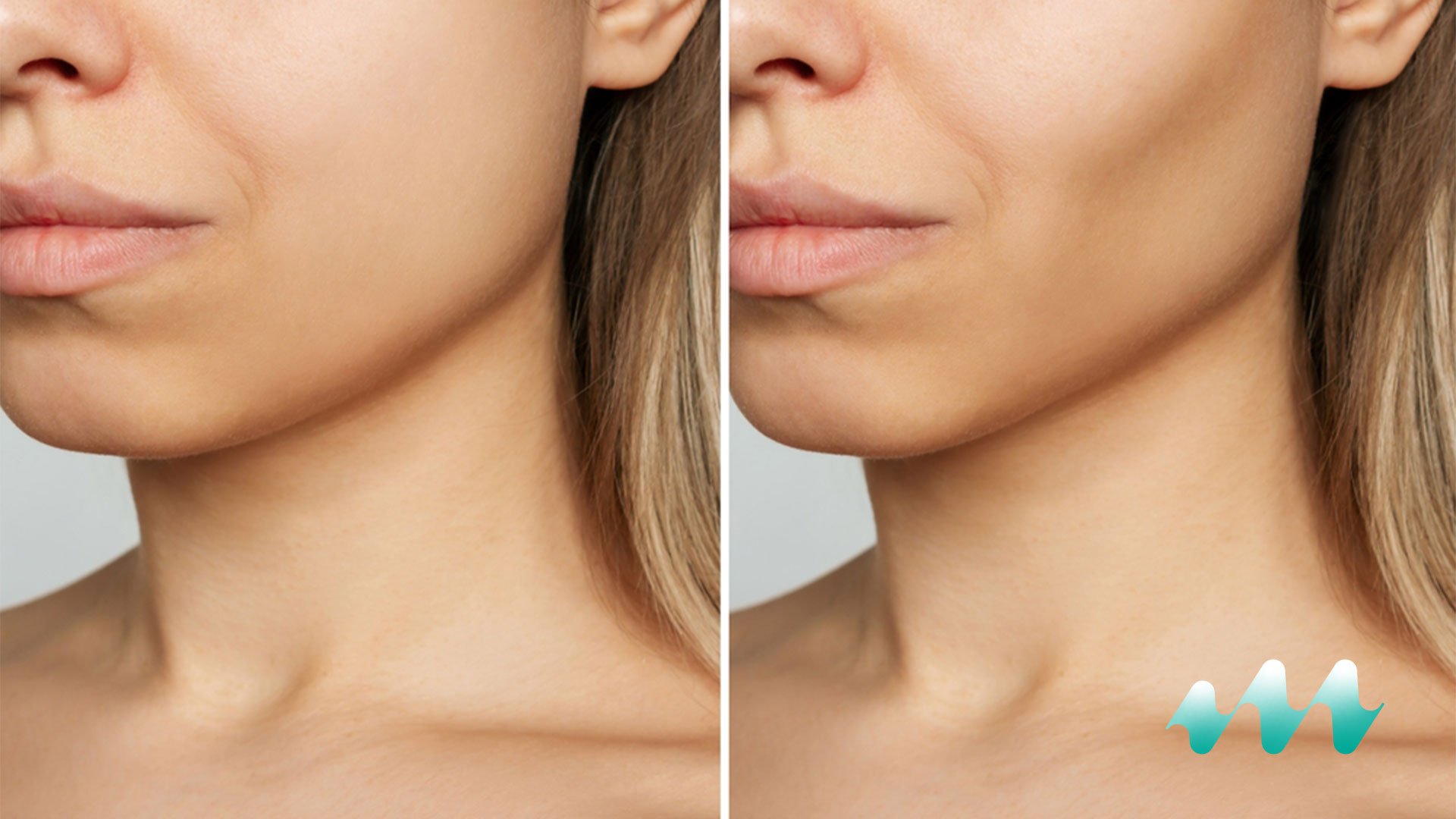
This fat is part of the face's natural volume, and that volume decreases with age. Some people stay full in the lower cheeks even after losing weight elsewhere, which is often what brings them to ask about it.
Buccal fat removal, also known as bichectomy, takes out part of this pad through a small incision inside the mouth. At Medicape the aim is a slightly slimmer lower cheek and a little more visible cheekbone, not a hollow or sculpted look. You can read the full procedure details on our bichectomy page.
The procedure changes one thing, the amount of fat in the lower cheek, so it suits people whose fullness comes from that area. Good candidates usually have these things in common:
A mirror cannot tell you how much of the roundness is buccal fat. Bone structure, the chewing muscle (masseter), the fat under the skin and the position of the soft tissues all shape the lower face. Your surgeon looks at all of these from front and side photos before telling you whether removing buccal fat would make a visible difference.
Some faces look wide because of a strong masseter muscle, others round because of fat under the chin or an undefined jawline. Removing buccal fat changes little there. For a softer jaw, jawline filler adds definition without removing anything, and some patients get the look they want with filler alone.
The removed fat does not grow back and cannot be put back. Your face will keep ageing and losing volume, so cheeks that look full today may look hollow in ten or twenty years if too much has been taken. That is the main reason we are careful about who we recommend it for. We usually advise against it, or suggest waiting, in these situations.
If your cheeks are not particularly full, there is little to gain and a real chance of looking drawn later.
If your face is round mainly because of overall weight, losing weight may change your face more than this procedure would. We usually recommend reaching a stable weight first and then reassessing. Large weight changes after the procedure will also affect how your face looks.
At this stage the face has often started to lose volume, and removing more can make it look older. When heaviness in the lower face comes from sagging tissue, a lift addresses the cause. In some facelift patients, buccal fat that has dropped with age adds to the heaviness of the jowls, and the surgeon may remove a small amount during the lift. That decision is made very carefully, and sometimes no fat is removed at all.
Many people lose some facial fullness naturally in their late teens and twenties. If you are at that stage, your surgeon may suggest waiting to see how your face settles before removing something permanent.
The very hollow cheeks seen in some photos would need too much fat removed for most faces. We keep enough fat to protect your face as it ages, so if that look is the goal, we will tell you so.
Buccal fat removal is a short procedure. It is usually done under local anaesthetic, with sedation if you prefer, and takes about 30 to 45 minutes. The surgeon makes a small cut inside each cheek, so there are no visible scars on the face. A carefully measured portion of the fat pad is removed, and the incisions are closed with dissolvable stitches that do not need to be taken out. You return to your hotel the same day.
It is often added to another facial procedure, such as rhinoplasty or double chin liposuction, so that you have one anaesthetic and one recovery; it adds only around 30 minutes and no extra scars. Jawline filler, if planned, is usually done once the cheek swelling has settled. Combining is not right for everyone, and your surgeon will recommend only what your face needs.
In the first few days your cheeks will be swollen, and your face may look fuller than before. That is expected and says nothing about the final result. The timetable below is a typical plan for patients travelling to Adana; your surgeon sets your own.
| When | What usually happens |
|---|---|
| Before you travel | Online consultation with your surgeon, review of front and side photos, written treatment plan |
| Day 1 | Arrival, consultation and the procedure; back to the hotel the same day |
| Day 2 | Check-up: your surgeon looks at the incisions and how you are recovering |
| Day 3 | Most patients fly home after their check-up |
| Days 1 to 3 | Swelling and tenderness in the cheeks; the face may look fuller at first |
| Week 1 | Soft food only; rinse your mouth as advised to keep the incisions clean |
| Weeks 2 to 3 | Most swelling has gone and most people are back to normal life; the incisions heal within a couple of weeks |
| Month 1 | Online follow-up with your surgeon |
| Months 2 to 3 | The final shape of the cheeks becomes visible |
Most people return to a normal diet after the first week. Because the incisions are inside the mouth, keeping the mouth clean is the main thing to look after in that period. If you notice swelling that keeps increasing, a fever or a bad taste that does not go away, contact your team. Our article on aftercare and follow-up after treatment explains how remote check-ups work once you are home.
With the conservative approach we use, the change is subtle: a slightly slimmer lower cheek and a little more visible cheekbone. The face still looks like yours. If you are hoping for a different face, this procedure is not the way to get it.
There are also risks worth knowing before you decide. The most important long-term one is over-removal, which can make the face look hollow or older over time. That is why we remove fat conservatively. One side can heal slightly differently from the other, and swelling, bruising or infection can occur, though they are usually minor. Injury to the salivary duct or a branch of the facial nerve is rare, because these structures lie close to the fat pad and careful technique keeps the risk low. Your surgeon will go through your personal risks with you.
The result is permanent. That is the benefit, and it is also the reason to be sure before you go ahead.
At Medicape, bichectomy is assessed, planned and performed by Prof. Dr. Cengiz Eser, a specialist in Aesthetic, Plastic and Reconstructive Surgery, who also wrote and reviewed this article. The procedure takes place at our contracted hospital, Private Medline Adana Hospital, in Adana.
The first step is an online consultation based on a front and a side photo. The surgeon tells you whether your face is likely to benefit, or whether another option or waiting would serve you better, and nothing is booked before that conversation. Once you are home, follow-up continues online, with a check-in at one month.
Yes. The removed fat does not grow back. Your face will still age naturally, and major weight changes will also affect how it looks, so the decision should take your face in ten or twenty years into account.
No visible scars. The incisions are inside the mouth and usually heal within a couple of weeks.
You will see a change once the swelling settles after a few weeks. The final shape of the cheeks is usually visible after about two to three months.
Sometimes. Filler in the jaw, chin or cheekbones adds definition without removing anything, and some patients are happy with that alone. Filler lasts around 12 to 18 months and does not reduce cheek volume, so your surgeon will tell you which option suits your face.
 English


