"My legs have always curved outwards. Is it too late to do anything about it now that I'm an adult?" We hear some version of this question often, usually from people who were told as children that they would grow out of it. Others write because the inside of the knee has started to ache, and they wonder whether the leg's shape is the reason.
This article explains what bowed legs are in an adult, why the bowing matters for the knee and how it is measured. It also covers what exercise and physiotherapy can realistically change, who is usually considered for surgery and what walking looks like in the months after an osteotomy.
Bow legs, or genu varum, means the legs curve outwards at the knees: with the ankles touching, the knees stay apart. In toddlers some bowing is a normal stage of development and usually straightens with growth. In adults the bones have stopped growing, so the shape you have now is the shape that stays.
In most adults the curve comes from the shape of the shinbone (tibia), and sometimes the thighbone (femur) contributes. The usual causes are:
The relationship can also run the other way. As cartilage on the inner side of the knee wears down, the joint can tilt further into a bowed position, so mild bowing may slowly increase later in life. Bowing that appears or worsens over a short period, or affects only one leg, should be seen by a doctor rather than watched.
In a straight leg, body weight passes roughly through the middle of the knee. In a bowed leg that line shifts inwards, so the inner side of the joint takes more of the load with every step. Over years this can cause pain on the inner side of the knee and early wear of the cartilage there. Plenty of people with bowed legs never have knee trouble, but when pain starts, alignment is one of the first things a surgeon checks.
The examination starts with you standing. The doctor measures the gap between the knees with the ankles together and watches you walk. The knee itself is then examined for where it hurts, how far it bends and straightens and whether the ligaments are stable. Leg length is checked too.
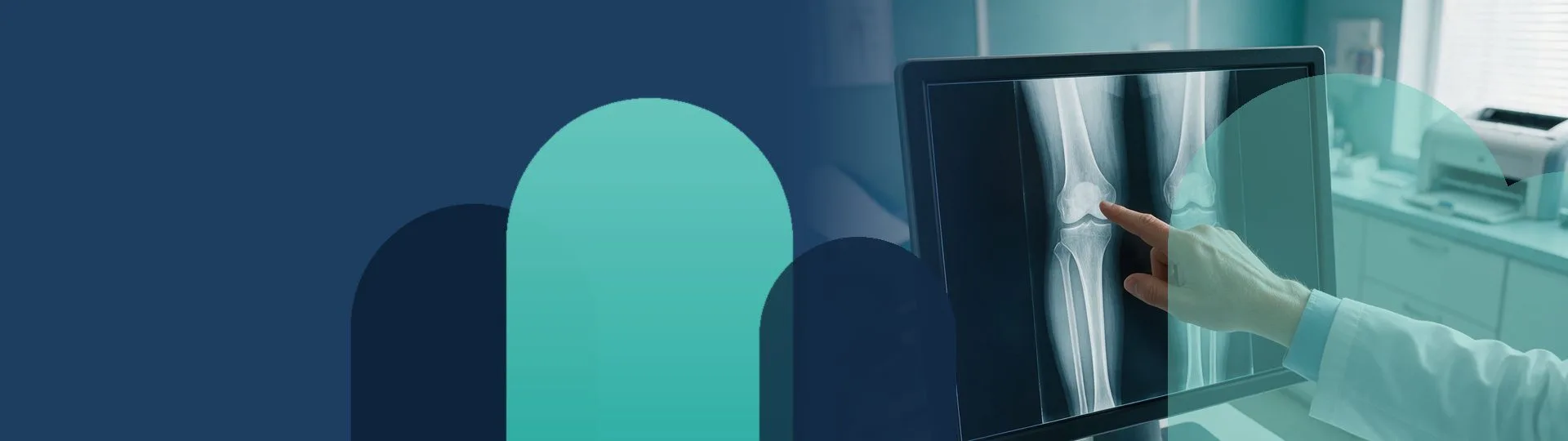
Most of the decision rests on a full-length X-ray of both legs taken while you stand, from the hips to the ankles. Standing matters because the image shows the legs under body weight. On it the surgeon traces the line weight travels along from hip to ankle and measures the angles of both bones. That shows where the bowing comes from, how many degrees of correction are needed and which bone to correct.
If the knee is painful, an MRI scan may be added when cartilage or meniscus damage is suspected. You can send existing X-rays from home for a first review; if they are not full length, you will usually be asked for new ones.
Many people hope exercises, a brace or a night splint will straighten their legs. In an adult they cannot change the shape of the bone. Stretching videos that promise straighter legs only strengthen the muscles around a bone that stays as it was.
For knee pain, though, non-surgical care is often the first step, and for some people it is enough:
These measures help the muscles and the symptoms, but they do not move the line of weight back towards the centre of the knee. If pain keeps returning despite a proper programme, or X-rays show the inner side of the joint wearing, correcting the alignment becomes the question to discuss.
Bow leg correction is bone surgery. In an osteotomy the surgeon cuts the bone in a controlled way, realigns it to the planned angle and fixes it, so the leg is straighter and weight is spread more evenly across the knee. You may be a candidate if:
There is no strict upper age limit; the condition of the knee and your general health count for more than age. Smoking slows bone healing, which keeps you on crutches longer.
When the curve sits mainly in the upper shinbone, a wedge is opened or closed just below the knee (a high tibial osteotomy). In other cases the bone is cut and straightened in one operation and held with plates and screws inside the leg. For complex deformities, larger corrections or a difference in leg length, an external frame such as an Ilizarov or hexapod frame is adjusted a little each day over several weeks, which means a much longer stay or return visits. Both legs are sometimes corrected together, but often in two stages a few months apart, so you always have one leg to stand on.
If appearance is your main reason, weigh it carefully. This is bone surgery with a recovery of several months and real risks, including infection, slow bone healing, a leg slightly more or less straight than planned and, rarely, injury to the nerve near the upper shinbone. Your surgeon goes through your personal risks before you decide.
You walk with crutches from the first days. The hospital stay is usually two to three nights, and the rest of the first two weeks is spent walking daily, having the wound checked and doing physiotherapy. Before you fly home, an X-ray shows whether the bone is sitting as planned.
| Timing | What usually happens |
|---|---|
| Weeks 1-2 | Walking with crutches, limited weight on the operated leg, wound checks, first physiotherapy sessions |
| Weeks 3-6 | Gradually more weight on the leg, regular physiotherapy |
| Around week 6 | Many people start walking without crutches, depending on the method and bone healing |
| Around 3 months | The bone has usually healed and most daily activities are back to normal |
| 3 to 6 months | Gradual return to sport, as advised by your surgeon |
These are general ranges; your surgeon sets your own plan from the method and your follow-up X-rays.
Leg surgery and a long flight both raise the risk of blood clots, so your plan includes blood-thinning medication as prescribed, compression stockings, early walking and, where possible, an aisle seat. Your surgeon clears you to fly only when it is safe; our article on when you can fly after surgery explains that decision. If one calf becomes swollen and painful, or you suddenly feel short of breath, go to the nearest emergency department.
Most of the recovery happens after you return, so arrange a physiotherapist and access to X-rays at home before you travel. Plates and screws can usually stay in place, though they are sometimes removed later.
At Medicape, bow leg correction is carried out by Prof. Dr. Cengiz Eser, who reviews your full-length X-rays in an online consultation before anything is booked and explains which method he recommends. Surgery takes place at our contracted hospital, Private Medline Adana Hospital. The standard plan covers about 14 days in Adana, set out day by day on the bow leg treatment page, and our guide to planning medical travel to Turkey covers the practical side, including bringing a companion while you are on crutches.
After you return, you send follow-up X-rays at agreed times and Prof. Dr. Eser reviews them online. Our article on follow-up from home describes how that works.
No. Once the bones have stopped growing, exercise, braces and physiotherapy cannot change their shape. They can help with knee pain, but only surgery corrects the alignment.
If the pain comes from extra pressure on the inner side of the knee, spreading the load more evenly often helps. Pain can have other causes, so your surgeon checks this first.
There is no strict upper age limit. The bones need to have finished growing, usually from the late teens; after that, knee health and general health matter more than age.
Sometimes. Often the legs are corrected in two stages a few months apart, so you have one leg to rely on while the other heals. Your surgeon advises based on your X-rays.
 English


