Gastric Sleeve Surgery
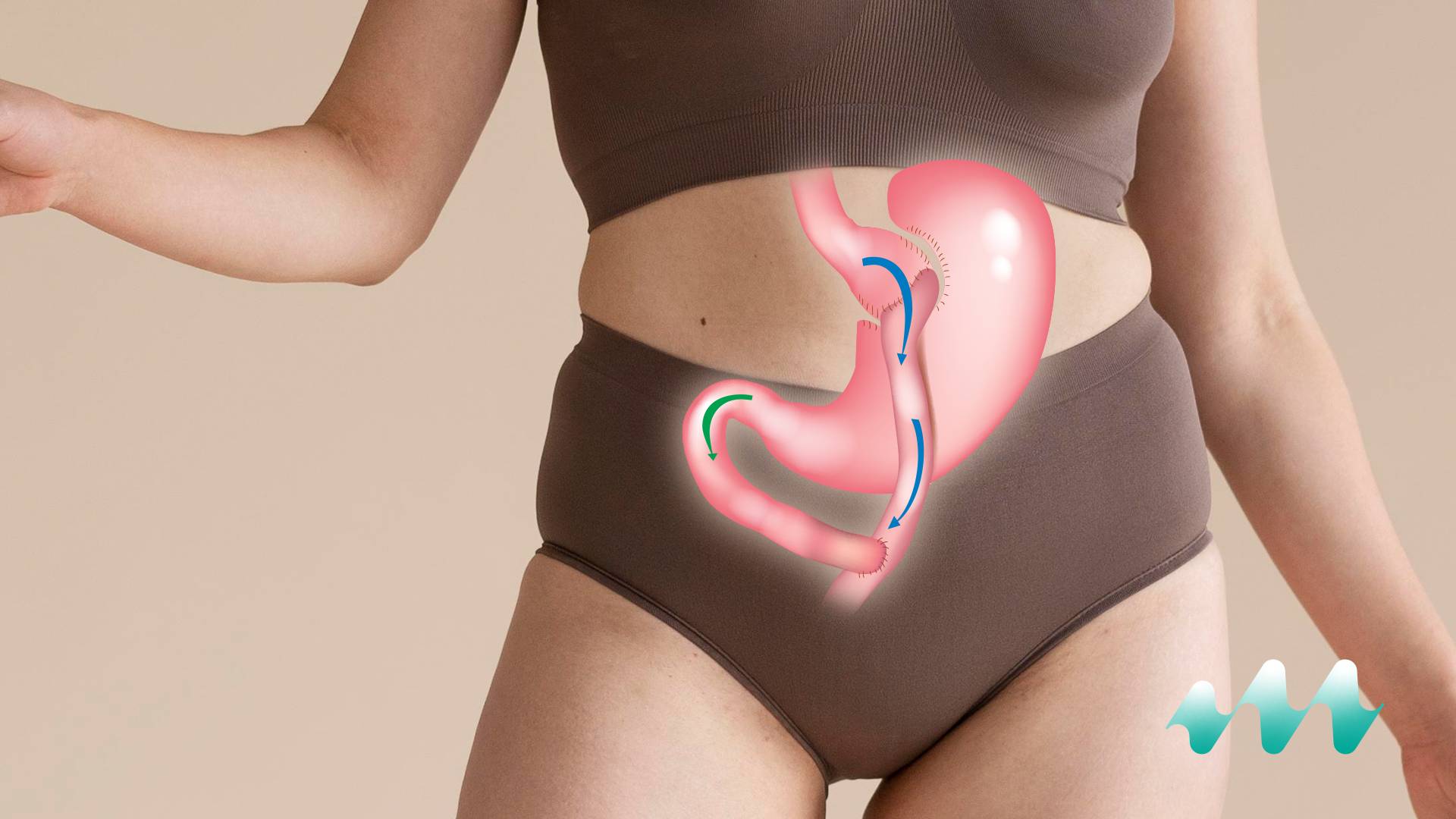
Gastric Bypass Surgery in Turkey. The Gold Standard for Weight Loss and Metabolic Health. Roux-en-Y gastric bypass (RYGB) is a combined restrictive and malabsorptive procedure that creates a small stomach pouch and reroutes the small intestine.
Roux-en-Y gastric bypass (RYGB) is a combined restrictive and malabsorptive procedure that creates a small stomach pouch and reroutes the small intestine.
This dual-action approach not only limits food intake but also reduces calorie absorption, making it one of the most effective treatments for severe obesity and type 2 diabetes.
🔹 Most effective for long-term weight maintenance (60-80% excess weight loss)
🔹 Highest remission rates for type 2 diabetes (83-90% of cases)
🔹 Significant improvement in metabolic syndrome
🔹 Reduction in hunger hormones (ghrelin) and increased satiety hormones
🔹 Proven 30-year track record with extensive research
✔ BMI ≥ 40 or BMI ≥ 35 with serious comorbidities
✔ Patients with severe GERD (better outcomes than sleeve)
✔ Those needing significant metabolic improvement
✔ Individuals committed to lifelong vitamin supplementation
✔ Non-smokers willing to make permanent lifestyle changes
🔸 Laparoscopic Roux-en-Y - Minimally invasive with 5-6 tiny incisions
🔸 Robotic-Assisted Surgery - For enhanced precision in complex cases
🔸 Hand-Sewn Anastomoses - Meticulous connection technique to prevent leaks
🔸 Biliopancreatic Limb Customization - Tailored length based on metabolic needs
🔸 Intraoperative Leak Testing - Routine testing for pouch and anastomosis integrity
🕒 Hospital Stay (2-3 Days):
🩺 First 2 Weeks:
🕒 Weeks 3-6:
🕒 Months 2-6:
🕒 1 Year & Beyond:
🔬 Metabolic Surgery Specialists - Focus on diabetes resolution
📈 95% Success Rate - Among highest in Europe
🛡 Complication Prevention Protocol - Leak rate <1%
🌍 International Patient Department - 10+ languages spoken
💲 All-Inclusive Packages - 60% savings vs. US/UK
How is gastric bypass different from gastric sleeve surgery?
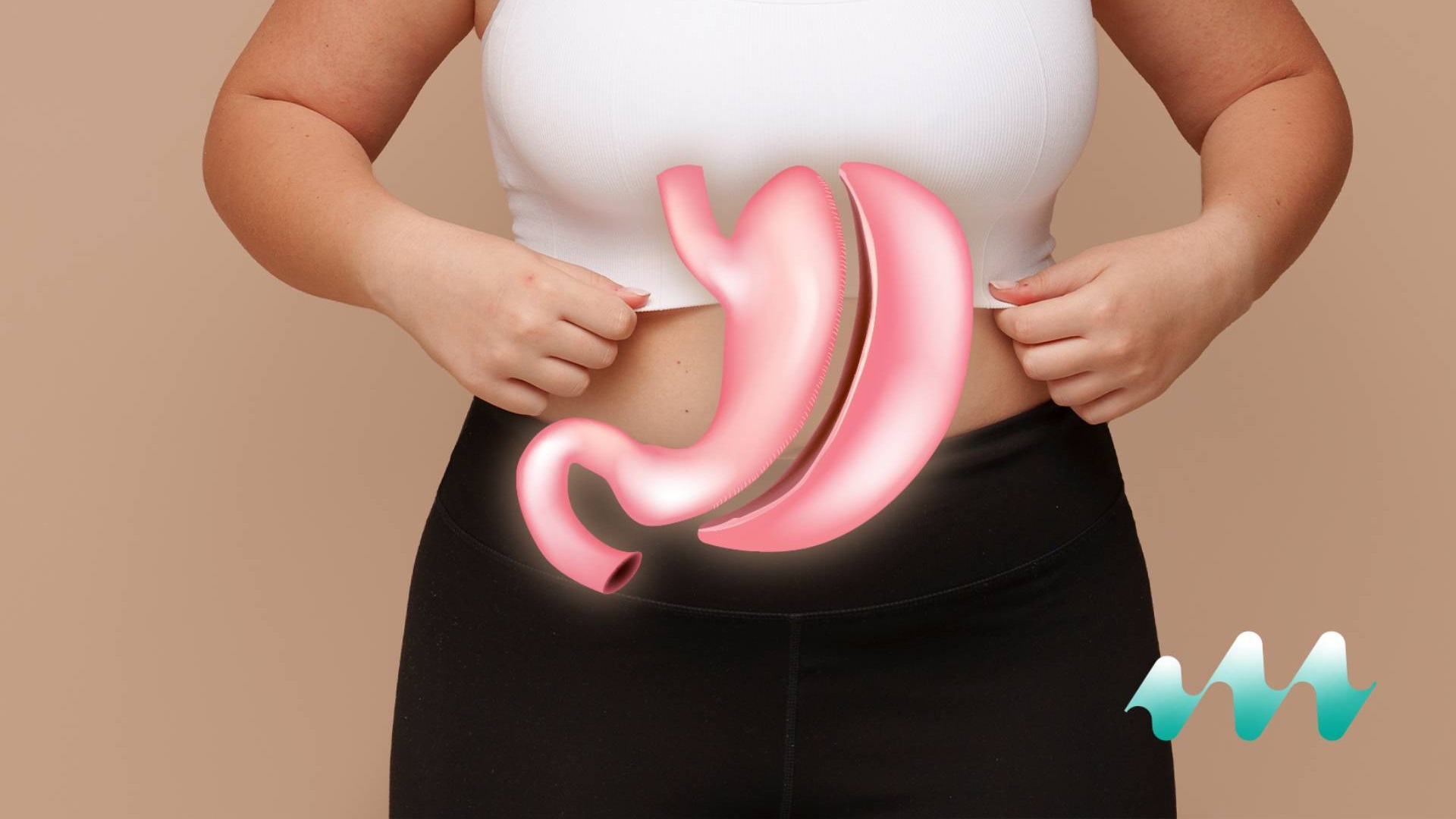
In a Roux-en-Y gastric bypass a small stomach pouch is created and the small intestine is rerouted, so the procedure both restricts how much you eat and reduces how many calories you absorb. Sleeve gastrectomy works by restriction alone. Because of this combined effect, bypass is often preferred for severe obesity, poorly controlled type 2 diabetes and significant reflux.
Who should consider gastric bypass?
Bypass is generally considered at a BMI of 40 or above, or 35 and above with serious accompanying conditions, and particularly for patients with severe GERD or metabolic disease. Candidates should be prepared to take supplements for life and attend regular follow-up. Smoking needs to be stopped well before the operation, as it raises the risk of ulcers at the new connections.
Is gastric bypass reversible?
The anatomy created by a Roux-en-Y bypass can in principle be revised or reversed surgically, but this is a complex operation with its own risks and is only performed for specific medical reasons. In practice you should regard bypass as a permanent change to your digestive system.
How long does the operation take and how long is the hospital stay?
The laparoscopic or robot-assisted operation usually takes around two to three hours. The hospital stay is typically two to three days, with close monitoring, a leak test and a gradual return to clear liquids. International patients generally plan about a week in Turkey in total.
What is dumping syndrome and will I be able to eat normally again?
Dumping syndrome occurs when sugary or very fatty food passes rapidly into the small intestine, causing nausea, cramping, sweating, palpitations or fatigue. It is common after bypass and is managed by avoiding sugar, eating slowly and keeping drinks separate from meals. Most patients return to a varied diet after a few months, simply in much smaller portions.
Which vitamins will I need after gastric bypass?
Because part of the small intestine is bypassed, the absorption of several nutrients is permanently reduced. Vitamin B12, iron, calcium, vitamin D and a multivitamin are usually needed for life, and blood levels are checked regularly. Missing supplements can lead to anaemia or bone loss even when weight loss is progressing well.
What complications can occur after gastric bypass?
Possible complications include leakage at an anastomosis, bleeding, internal hernia, marginal ulcer, bowel obstruction and nutritional deficiency. Hand-sewn anastomoses and routine intraoperative leak testing keep leak rates low, but no operation is free of risk. Persistent abdominal pain, fever or vomiting after you return home should be reported to us immediately.
Will I need skin tightening surgery after major weight loss?
After large weight loss some patients develop loose skin on the abdomen, arms, chest or thighs. Body contouring is usually considered only once weight has been stable for several months, generally around 12-18 months after bypass. Whether it is needed depends on your age, skin elasticity and the amount of weight lost.
![]() |
![]() |
| Hospital-Based Metabolic Surgery Contracted Hospitals with Intensive Care Backup |
Laparoscopic Roux-en-Y Bypass Surgeon, Dietitian and Physician Together |
| Gastric bypass rearranges the digestive tract, so Medicape Health arranges it only in contracted Adana hospitals where anaesthesia, intensive care and inpatient monitoring are available throughout your stay. | Because absorption changes permanently, the plan does not end at the operating table. Limb lengths, leak testing and the lifelong supplement schedule are decided by a team rather than by the surgeon alone. |
Gastric bypass changes not only how much you can eat but how much your body absorbs. That makes long-term supervision as important as the operation, and turns the choice of country into a question about aftercare.
Roux-en-Y gastric bypass is technically demanding: a small pouch is created and the small intestine is rerouted, so several new connections must hold. Turkish bariatric centres perform it in high numbers, and that experience shows itself in the details rather than in the headline: anastomosis technique, internal hernia prevention and routine intraoperative leak testing.
Medicape Health coordinates the pathway from Adana. Your file is reviewed remotely before you travel, and at that stage the discussion is often about whether bypass is the right operation for you at all. Reflux, previous bariatric surgery, metabolic disease and medication all influence the recommendation, and the decision belongs to the surgical team after examination.
Aftercare matters more here than in any other bariatric procedure. Because part of the small intestine is bypassed, absorption of vitamin B12, iron, calcium and vitamin D is permanently reduced, so programmes are built around scheduled remote reviews and blood-test intervals rather than a single discharge appointment.
A gastric bypass pathway in Turkey usually includes:
Tell us briefly about your case and our patient coordinator will get back to you with the details.
For a procedure with permanent nutritional consequences, patients weigh surgical volume, hospital capability and the seriousness of the follow-up programme together. Turkey leads in metabolic surgery because these three are organised as one service rather than three separate purchases.
Key advantages of choosing Turkey for gastric bypass:
Adana contributes practical advantages: an established medical city with its own international airport, a short transfer to hospital, and quiet recovery close to the surgical team during the days when observation still matters.
A Partnership Backed by International Trust
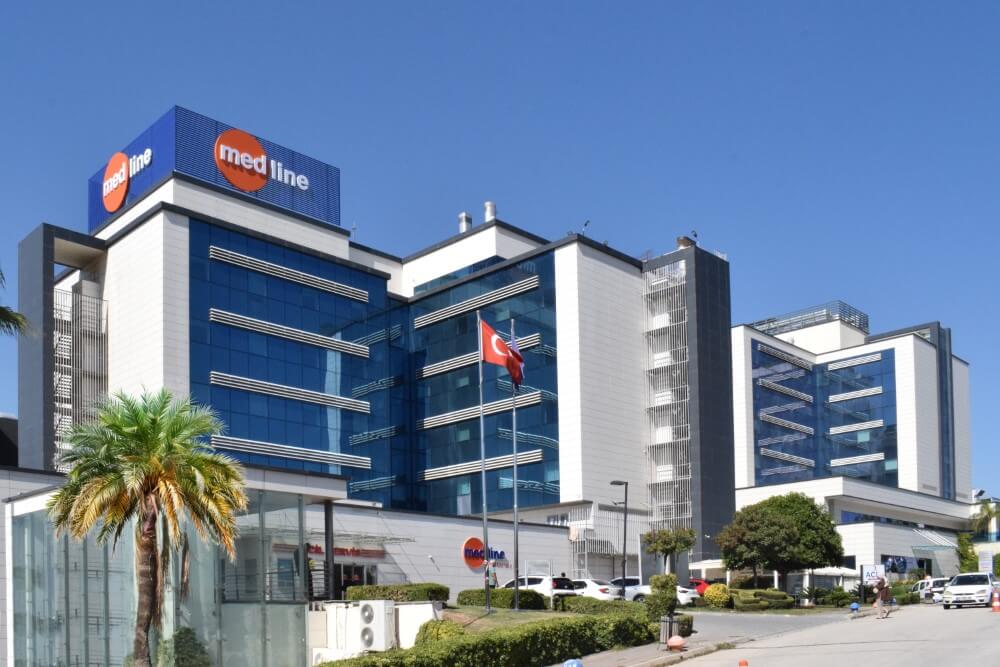
Medicape Health works in partnership with Medline Adana Hospital, a long-standing healthcare provider for the international community, including U.S. personnel associated with İncirlik Air Base.
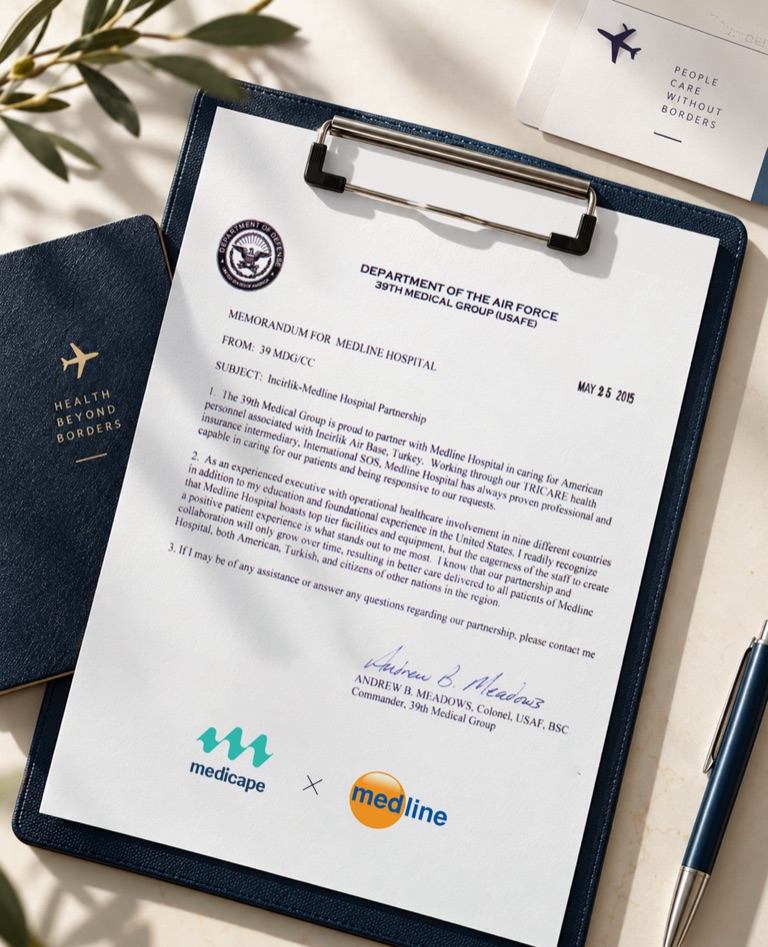
A Relationship Recognized Since 2015
Medline Hospital’s quality of care and patient experience were recognized by the Commander of the U.S. Air Force 39th Medical Group in 2015.
About our partner hospitalGastric bypass surgery in Turkey is generally more accessible than in most Western European systems while being performed in fully equipped hospitals. The cost is not a catalogue figure: it follows the complexity of your case and is only meaningful once your file has been reviewed.
Factors that influence the price of gastric bypass surgery:
Medicape Health therefore does not publish a bypass figure in advance. A quotation issued before the endoscopy, blood work and metabolic assessment describes a package, not your operation.
| Comparison Criteria | |
|
|---|---|---|
| Surgical Expertise | High annual volume of primary and revisional bypass procedures | Certified surgeons with volumes varying between centres |
| Technology & Safety | Laparoscopic and robot-assisted platforms with routine leak testing | Modern laparoscopy, robotic access depending on the centre |
| Waiting Time | Surgery scheduled within weeks once assessment is complete | Extended referral, assessment and approval pathways |
| Treatment Packages | Testing, surgery, hospital stay, accommodation and transfers together | Procedure-based costing with separate added charges |
| Materials & Devices | Reinforced stapling, hand-sewn anastomosis options and leak protocols | Comparable devices with provider-dependent protocols |
| Customization Level | Limb length and technique adapted to metabolic and reflux findings | Standardised service criteria across the pathway |
| International Patient Experience | Interpreters, transfers and structured remote follow-up included | Designed primarily for domestic patients |
| Privacy & Comfort | Discreet recovery with dedicated medical travel support | Local treatment with limited discretion |
Gastric Sleeve Surgery
Type 2 Diabetes Surgery